Monday, 27 July 2026

Addiction, Mental Illness, and Having vs Being

This is about grammar. 

Well, not really. It’s about the difference between the Being Mode and the Having Mode - two different modes of existing in the world that lead to very different ways of thinking about ourselves, other people, and the world. I'm going to talk about the difference between these two modes and how a confusion between the two can lead to everything from existential anxiety to addiction to mental illness.

In his 1976 book, To Have or to Be?, Psychoanalyst Erich Fromm argues that fulfillment comes from focusing on the mode of being, rather than having. The mode of ‘being’ is oriented towards development of character and identity and being in the world. By contrast, the having mode is oriented towards domination of nature, material possessions, and the promise of infinite consumption. He argues that modern materialism has led to a society that seeks out "having" things rather than "being." 


His interpretation is that this started at the advent of the industrial age in the mid 1700s. This is when the myth of infinite production and consumption started. People started to believe that maximum pleasure through the maximum attainment of goods was possible. But of course, the myth of infinite production and consumption is just that - a myth. The old adage, “You can’t take it with you when you go,” refers to the fact that after death none of us can take any of our material possessions with us. Even though we know this conceptually, we still try to address our yearning for being something by having things. He argues that a reorientation to the Being mode is a way forward out of the existential anxiety that is characterized by the knowledge of the futility of the having mode. 

We also see the distinction between the Having and Being Modes in Buddhism. In his book Alone With Others, an Existential Approach to Buddhism, Steven Bachelor talks about this difference between the Have Mode and the Be Mode. Batchelor writes, "These two dimensions reveal two different attitudes towards life. In terms of having, life is experienced as a horizontal expanse precipitating towards ever receding horizons; in terms of being life is felt in its vertical depths as being awesome, foreboding and silently mysterious. Nowadays, the tendency to be preoccupied with having, at the expense of losing touch with the dimension of being, is becoming ever more pronounced." 


He goes onto describe that the purpose of the Dharma, or Buddhist teaching, is to put us back in touch with the Being Mode. The story goes that Siddhartha was prophesized to either be a great king or a great religious leader. Siddhartha’s father, wanting his son to be a ruler, strove to eliminate all areas of hardship and friction in his son’s life, with the hope that this would prevent him from having any of the compassionate revelatory experiences that could lead his son to the life of a religious. Siddhartha lived his life in a palace with his every whim met. He never wanted for anything - he had everything his heart could desire. 

The story continues with Siddhartha and his driver Channa entering into the town one day, where Siddhartha sees for the first time an elderly man, a sick man, and a dead man. Never having encountered these acute representations of mortality before, Siddhartha is perplexed. Channa goes on to explain that everyone gets old, everyone gets sick, and in the end, everyone dies. Siddhartha understandably feels the world falling out from underneath him. Despite all of the opulence and extravagance of his life in the palace, he, too, will face aging, sickness, and death. On his way back to the palace, he sees a religious mendicant - a man who has renounced all aspects of material life for the purpose of spiritual fulfillment. The peace in the man’s eyes presents a stark contrast to the existential storm raging in the young prince. It is the witnessing of these four signs - the old man, the sick man, the dead man, and the mendicant - that cause a shift in Siddhartha so seismic that he renounces his palatial life and sets off on a journey to find enlightenment. Siddhartha's story of renunciation, in which he leaves his opulent palatial life to pursue the life of a religious mendicant, is the ultimate allegory for turning away from the having mode and trying to immerse oneself in the being mode. If you're interested in learning more about this interpretation of the Renunciation, I highly recommend John Vervaeke's mindblowing Youtube series Awakening from the Meaning Crisis.


In Buddhism is the figure of the Hungry Ghost is prominent. While in this system of belief, all people become ghosts after they die and then later fade out of existence, a hungry ghost is a special case. A hungry ghost is the ghost of someone who had evil intent or bad deeds in life. The hungry host has an insatiable appetite that can never be satisfied. In Buddhism, the story of the hungry ghost is an allegory for people who are consumed with desire and live a spiritually bereft lifestyle, someone who has strayed from the Be Mode into the realm of absolute Having.

In his book Siddhartha’s Brain, James Kingsland uses the hungry ghost to explain how in addiction, we become increasingly habituated to pleasure-inducing stimuli until we need more and more of the stimuli to feel anything at all. This has to do with the dopaminergic reward system in the brain. He writes, “The reward circuit in our brain gives us the conviction that more will always be better - and yet we are never satisfied for long. We are on a ‘hedonic treadmill’, when the novelty of any experience wears off and the kick we get from it subsides. The treadmill speeds up so we have to run faster, consuming more or having to find different sources of pleasure just to stay in the same place.


Dr. Gabor Mate also uses the hungry ghost analogy to describe his experience working closely with people with substance use disorders in East Vancouver. He makes an argument that rather than being a genetic disease or moral failing, addiction is best characterized as human development that has gone off the rails. He argues that the hungry ghost metaphor is an apt one, as addicts constantly seek something outside of themselves in order to fill an insatiable need for fulfillment. This insatiable need is created when as children we are subjected to unsafe environments and other conditions that are not conducive to healthy development. Furthermore, he argues that the extreme examples in his book are just stories of people who exist on one end of a continuum that we all occupy. He writes, "I believe there is one addiction process, whether it is manifested in the lethal substance dependencies of my patients; the frantic self-soothing of overeaters or shopaholics the obsessions of gamblers, sexaholics, and compulsive internet users; or the socially acceptable and even admired behaviours of the workaholic." All of us have a tendency to fill the hole inside of us with quick fixes - whether it's a hit of heroin or a like on social media.


Other traditions have alluded to this formulation of human experience as being bound up in either having or being. Anishnaabe botanist Robin Wall-Kimmerer in her book Braiding Sweetgrass tells us the legend of the Windigo, a figure who features prominently in the histories of many Indigenous groups across North America. The Windigo is one of those tales used to teach young children morality and conduct. 


She writes, "The Windigo is the legendary monster of our Anishinaabe people, the villain of a tale told on freezing nights in the north woods. You can feel it lurking behind you, a being in the shape of an outsized man, ten feet tall, with frost-white hair hanging from its shaking body. With arms like tree trunks, feet as big as snow-shoes, it travels easily through the blizzards of the hungry time, stalking us. The hideous stench of its carrion breath poisons the clean scent of snow as it pants behind us. Yellow fangs hang from its mouth that is raw where it has chewed off its lips from hunger. Most telling of all, its heart is made of ice....This monster is no bear or howling wolf, no natural beast. Windigos are not born, they are made. The Windigo is a human being who has become a cannibal monster. Its bite will transform victims into cannibals too....It is said that the Windigo will never enter the spirit world but will suffer the eternal pain of need, its essence a hunger that will never be sated. The more a Windigo eats, the more ravenous it becomes. Consumed by consumption, it lays waste to humankind." Kimmerer explains that the story of the Windigo is used to teach people, especially young ones, about one of the most important tenets in Indigenous ways of knowing: Take no more than you need, never take the last of something, and always honour and pay tribute to what you've taken. This is especially important during winter when times are lean. 


Norval Morriseau, Windigo

The Windigo, the very monstrous embodiment of the Having mode, lives in all of us. He is after all, a man. She writes, "A windigo was a human whose selfishness has overpowered their self-control to the point where satisfaction is no longer possible." She makes an argument in her book that getting in touch with Indigenous ways of knowing, honoring the idea of human participation in the natural world, the importance of reciprocity and respect for the land and all of its inhabitants, is an actionable way of recognizing our over-consumptive nature and building a better relationship with the world. I would go further and argue that her argument maps well onto a suggestion for recognizing and challenging the Having Mode and turning more towards the Being Mode.

The distinction between the Have and the Be mode can be a helpful way of not only characterizing addiction, but all mental illness. Going back to Erich Fromm, he argues that placing the nexus of mental illness as being solely centred in the individual is foolhardy. Rather, societal structure plays a massive role in whether we can be mentally well. And, as we live in a society that is obsessed with Having and largely ignores Being, this is not very conducive to mental wellbeing.

Take advertising for example. Rarely do advertisements actually advertise the product they are selling. They are not selling a thing, they are selling an experience. They know that we're experience-oriented beings, but processes are harder to get at, and a hell of a lot harder to sell. So they disguise products as processes. You're not buying the makeup, you're buying the self confidence that the model exudes when that handsome man gives her the eye. You're not buying the car, you're buying the winding miles of driving down empty coastal highway. You're not buying the shirt, you're buying the approval, regard, and envy of your peers. Products disguised as processes. Have disguised as be. So we try to fill this process-shaped hole inside of ourselves with products. And when that doesn't work, what do we do? Buy more products, of course. 

So given that we live in a society that not only ignores Being but erroneously tells us that seeking Having will satisfy our being, what the hell do we do?

Well, in my view, the first step is to be aware of when we are conflating having and being.

Having is not all bad. We need to have things. That too, is part of human nature. But what's damaging to us is when we confuse one for the other. This can be as simple as being more media literate and really asking ourselves why we feel we need a particular item or object. This can also involve reflecting on our sense of dissatisfaction and where it is really stemming from. 

The tough part about this, is that focusing on the Being mode leads to some of life's toughest existential questions. Batchelor writes: "What is life? How are the potentials of life to be actualized? What is the purpose and meaning of life? These are all questions that gradually formulate themselves in this unstructured region which is slowly disclosing itself to us. They may not, of course, find such explicit expression; they may be felt as a vague but deep anxiety, a sense of disorientation, or a lack of purpose and direction." I mean, did I write this? Did you? How relatable.

So what do we do? Well, I of course do not have the answers to this. Sorry. 

But, I have some suggestions from scientific and spiritual literature as well as my own experience. 

___

1. Meditation

The root of meditative practices like mindfulness and contemplation is to put us in touch with the being mode. In mindfulness, we land in our bodies and watch our breath. When our mind starts to inevitably wander on to everything we need to do and obtain, we gently but firmly bring our minds back to being here, now. This helps us remember that we are alive, here, now, in this world. Contemplations on things like the impermanent nature of everything in the world help us really get in touch with what is important in our lives.

2. Nature and Indigenous Ontologies

Nothing reminds you more of Being in the world than being in nature. It reminds us that we are animals, that we are connected with the natural world in an intimate way. Many Indigenous groups understood this connection and it was foundational in their understanding of the world. Due to colonization these views have been lost to non-Indigenous understanding. But we have a lot to learn from Indigenous ontologies and how viewing ourselves as connected to the natural world can help us feel more at home in the world. 

3. Flow states

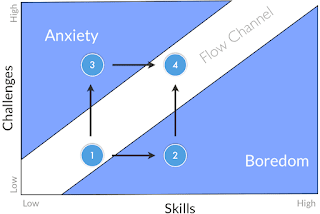
Flow has been characterized by Mihaly Czickmentlahyi characterized as Optimal Experience. It's a state of being in which your skills and capabilities *just* match the demands of a challenging and rapidly changing environment. It's a universal experience - people the world over, regardless of location, ethnicity, gender, age, experience Flow and characterize it very similarly. It involves feeling very in touch with your task and the environment in an intimate way. It involves losing your sense of ego or the narrative 'I'. It involves being challenged and forced to extend your capabilities. It involves very rapid error feedback. 

4. Connection and community

This is an inherent part of human nature - we crave social connection and community. I won’t say too much about this here, because I would like to explore this more in depth in the future. But finding connection and building and/or being part of a community is an excellent, concrete way to dwell more in Being.

5. Philosophical friendships

This relates to the point above, but goes a little bit deeper. What kind of relationships are we to have if we want to reorient ourselves more to towards the Being mode? Epictetus, a stoic philosopher from second century CE was a proponent of developing friendships and communities that were dedicated towards exploring these “have vs be -y” kind of questions. 

6. Practice letting go of objects

Another practice from Stoic philosophy involves meditating on the impermanence of physical objects. Everything from a favourite mug (which you would be encouraged to develop an attachment to, and then smash) to our loved ones (who we must remember as impermanent), to even one's own life or health. While these are pretty extreme examples, it does us good, I think, to remember that nothing in this world is permanent. No amount of having could ever touch the importance of being. 

7. Activism and Rejecting Consumerism.

Lastly - If the world we live in is contributing to our pain by selling us having dressed up as being - we need to do our part to actively shape and change the world we live in. We need to decolonize our minds, reject consumerism, and engage in activism that supports the world we actually want to build.

___


So, those are just some concrete ideas on how to shift from the Have Mode to the Be Mode. Therapists and trusted supporters can also be helpful resources in helping you reorient. I am not an expert in this and it's something I grapple with every day. But dialogue and reflection is a part of this process.


Wednesday, 5 March 2025

reconciling empiricism and spirituality, or an account of the concert i went to last weekend

Another life-changing concert, another post. It's been a while. 

I am often moved by music in ways that penetrate beyond the sensory and the emotional. The magnitude by which music can move me in the sensory and emotional domains would constitute a life-changing experience in and of itself. But when it comes to life-changing concerts, they are life-changing because I am often rocked in spiritual and existential domains as well. (I have written about such previous experiences here and here.)

As per, this post can continue in one of two ways:

1) With an exploration of my understanding of my burgeoning spirituality and how I am working to reconcile it with empiricism, or
2) With an account of the concert I went to this weekend. 

For the third time in a row I will start with 2), as again, it serves as a more gradual jumping-off point.

An Account of the Concert I went to this Weekend

I flew to Austin to see Alcest. The French band has not toured North America since 2014. As I am traveling all of March, and as their Toronto date lands mid-March, I decided to fly to Austin, TX to see Alcest, because they mean that much to me. And because I heard Austin was a cool city (it is). 

Alcest's music has been central to my spiritual exploration.

Their music has a way of bringing together apparent opposites in such a profound way. Light/Dark. Beauty/Harshness. Spirit/Substance. Angelic layered guitars and voices/Black metal screams and blastbeats. 

The project was created as a way for frontman, Neige (aka Stéphane Paut) to process and reflect on a spiritual experience he had as a child. So the spiritual components of the music are very apparent. 

I brought my friend Shae to Austin and to the show. She had never heard the band before and wanted to go in completely without expectations. 

The show was phenomenal. The music is indescribably beautiful, with slashes of darker, heavier elements throughout. The choral vocals evoke angels, the layered guitars add to the feeling of soaring, and the bombastic drum and bass elements hold everything together and inject incredible energy. What should feel frantic feels grounded. What should feel frenetic feels intentional. 

The lyrical themes, largely sung in French, have to do with nature, grief, loss, time, death, and spirit. They touch darkness without ever succumbing to it. They couch themselves in the finiteness of life without ever turning towards the despair that can seem so inevitable in the exploration of such topics. 

Needless to say, the music means a lot to me. And it clearly meant so much to the crowd, too. Many of us were crying at times, holding onto one another, or just mesmerized and taken away. Shae and I were going to go out dancing after but both opted not to. We needed time to process what we had just experienced.

Part of the reason I appreciate this band's music so much is because I feel that they approach topics and questions surrounding spirituality in a way that deeply resonates with me. It is curious, and never parochial. It is grounded in experiences of Nature and the feelings that can be engendered by observing cranes in flight at dawn. Spirit is deeply connected to wonder, and while it may be otherworldly, it is deeply rooted in experiences that are of this world. The music approaches themes of death and loss in a deeply existential way; In that the observation of the passage of time and the inevitability of loss can create a sense of purpose and wonder, rather than a sense of despair. This is something that I try to cultivate in myself as much as I possibly can. 


Reconciling Empiricism and Spirituality

Both of my parents had religious trauma and were refugees. I was raised an atheist and grew up with quite negative feelings towards religion, especially organized religion. Spirituality was never a question or even an option for me. I grew up with a rather scientific and empirical worldview; That the things we can observe are what constitutes reality. That magic does not exist. That the spirit does not exist. After we die, we rot, and that's that. Spirit is something that was invented either to A) Assuage our fears of mortality, and/or B) To control us through organized religion. 

As I have been getting older, my feelings around Spirit, or something like it, have changed. 

So what has changed for me? There are a number of angles I wish to explore here, and they are all connected.

Death Becoming Real

A large part of me wonders if it's just because, as 35 approaches, death is becoming more real, and I am inventing something to take the sting out of it. (I wrote a song about this very thing, it's called Foxhole). Part of it could have also been losing my mom in 2015, or losing one of my best friends, Taylor, two years ago. Either way, death is more real now to me than it ever has been. 

Psychedelics
 
It also could be that I have relatively recently discovered psychedelics, and am a big believer in their therapeutic and healing potential. What's very interesting to me is that the depth of the mystical experience engendered by the psychedelic experience appears to be a predictor of lasting health outcomes, according to a number of studies. I have had several mystical experiences under the influence of psychedelics, in both recreational and therapeutic contexts. In the therapeutic contexts especially, I have been able to experience what it would be like to die, and have had feelings of communing with those who have died, and have found this to be extremely comforting and healing. 

Indigenous Ontologies

I don't think you can talk about psychedelics/plant medicines without talking about Indigenous ontologies or worldviews that include communion with these sacramental substances. Indigenous worldviews differ from group to group of course, but many largely centralize the concept that we, as humans, are part of nature, and part of the earth, rather than being superlative or external to it. And that psychedelic plant medicines are ways of opening up ourselves to the wisdom of Nature, the Earth, the Universe, and even the Gods. 

Being a Part of Nature, and not Superlative to It

My experiences with psychedelics, and my (admittedly, limited) exploration of various Indigenous worldviews (through reading, conversation, and community) have been central to the development of the conviction (or perhaps, remembering) that I am part of Nature, and not separate from or superlative to it. I have experiences now that remind me of the magic that I felt as a child. I can look at a leaf, or a bird, or feel the sun on my face, in ways that evoke a childlike wonder that I thought I had lost. Furthermore, I have an at-home-ness now in nature that I don't think I have ever had. I feel cradled by the world more than I ever have. As such, the dissolution of my body to be re-used by the mycelial network doesn't scare me as much as it used to. 

Teleology

Nature has an intelligence to it. I don't mean intelligence in the way that a human has intelligence. But I mean in the way that a tree knows how to grow, that the tree is in the seed. I am reminded of the Aristotlean concept of Telelogy, where everything in nature has an ingrained purpose, or telos. The telos of the acorn is to become the tree, without external direction. 

Inner Healing Intelligence

This dovetails with the idea of the inner healing intelligence, an idea often discussed in therapeutic psychedelic circles. When we cut our skin, as long as we create the conditions for healing, we don't have to tell our skin to heal. The body knows what to do. The idea is that psychological or traumatic wounds also follow this telos, to borrow a term. We have an inclination towards healing, and it's largely the conditions for healing that need to be met in order to allow the inner healing intelligence to do its work. 

The Theory of Everything

Speaking of intelligent systems, isn't it amazing that physicists and other scientists have already found ways to reconcile three of the four fundamental forces in the universe (electromagnetism, the weak nuclear force, and the strong nuclear force)? Isn't it amazing that there's just one outlier, gravity, and that scientists believe that a Theory of Everything could potentially exist wherein all four fundamental forces could be explained in one framework? I don't believe in a Creator but when you look at stuff like this, you can really see how one may be persuaded. The Universe has an Intelligent Organization even if it doesn't have Intelligent Design. 

I think a redefinition of what constitutes Intelligence may be helpful in chewing on the concept of Intelligent Organization. 

System 1 and System 2 Cognition

I am reminded of Kahenman (2011)'s model of consciousness that outlines the difference and interaction between System 1 and System 2 cognition. System 1 is governed by evolutionarily deep/old structures, such as the HPA axis and the limbic system, and largely constitutes Interactional Intelligence. System 2 by contrast is governed by evolutionarily new structures in the cortex and largely constitutes Computational Intelligence. 

source


My belief is that the Earth, and maybe even the Universe, have System 1 Intelligence. The Earth certainly has Interactional Intelligence. Trees on the other side of a forest will start reacting to a forest fire kilometers away due to chemical messages sent through mycelial networks.

The earth (and the universe) may not have System 2 intelligence like we do, but it doesn't mean they don't have intelligence. 

Pulling it All Together

What is my spirituality? I believe that 

1) We are not superlative to nature, but part of it
2) Nature, the earth (and maybe even the universe) have System 1 Intelligence (examples of this being teleology, the inner healing intelligence, many physical forces hanging together, and the way nature is)
3) We are a part of this intelligent system 

Therefore: Spirituality is just the being-in-touchness with these above facts, in a way that is engendered by subjective feelings of wonder, meaningfulness, at-homeness, and belonging. 

There is a reason why these elements are revealed to us (with a subjective level of ontological realness) in moments like concerts, communion with nature, meditation, engaging in psychedelic healing, etc... These are moments that are rife with sinking into the Interactional Intelligence that we share with planet earth. We are able to, in these moments, divest ourselves of thoughts of ego, money, planning, success, or other factors (Having factors) and just be in touch with what is happening in the moment (Being factors). We can divest ourselves of the Computationally Intelligent aspects that (while central to modern human existence) separate us from being a part of the Interactionally Intelligent system of the earth and universe. 

When I started this blog years ago, I didn't understand dialectic as well as I do now. Looking back, I see that 90% of the entries on this blog take the form of a dialectic. 

A dialectic is a living process and is rarely (if ever) done. As such, this direction of thought (i.e. reconciling empiricism with my burgeoning spirituality) is a living process. I am just starting to form and digest these thoughts, and I am grateful to Alcest and the concert I went to this past weekend for helping shake some of these ideas loose. Hopefully they landed in a way that is at least somewhat coherent. I thank you for following along with me, if you have thus far. 


Tuesday, 11 August 2020

condemnation culture is inconsistent with restorative justice principles and hurts our movements

There is a lot of conversation lately about "Cancel Culture" and how it helps and harms. 

We have the Harper's Letter, cosigned by 100-odd writers, about why cancel culture removes the ability for writers/artists/etc to make mistakes and explore new avenues, and push new boundaries.

We have AOC and other news outlets' responses that so-called Cancel Culture is just a term that many right-leaning folks use to devalue a movement that is based on taking accountability for one's actions. 

E.g. Celebrity/figure/person makes a remark that is (even in a small way) sexist, racist, etc. 

Left "woke" would say - this person is trash, must be held accountable, and no longer deserves a platform for their sexist/racist etc. beliefs. 

Right "woke" would say - this is the Lost Left edging further into totalitarianism and a world where people are losing their jobs for errant tweets.

In order to avoid using a term created to devalue a culture based on accountability, I'm going to be using the term Condemnation Culture instead of cancel culture to describe what I'm criticizing. 

My choice in this matter is due to the fact that I wish to preserve the very valuable elements of a) holding people accountable and b) working to ensure community safety that I believe "Cancel Culture" is inherently based on, while still leveraging criticisms of flawed aspects of "Cancel Culture," and of leftist movements in general. 

As the criticisms I wish to leverage are based around the sentiment of moral condemnation, I offer the new term, Condemnation Culture. 

But first: 

Historicized vs Naturalized Worldview

One way that we can think of distinguishing the left and the right, as explained by the late Michael Brooks, is that the left tends to have a "historicized" view of the past, while the right tends to have a "naturalized" view of the past. A historicized view of the past understands current circumstances to be caused by historical circumstances, and therefore our addressing of current circumstances needs to look at what has happened in history. You look at a current phenomenon and ask, "What are the historical, social, and material reasons why this is happening now?" E.g. We have anti-black racism because of slavery because of colonialism, and because it's entrenched in the economic project that is capitalism. Therefore, efforts to address anti-black racism also need to address its roots. Whereas a naturalized worldview understands current circumstances are the way they are because they are the natural order of things. History, no matter how unjust, has played out the way it has played out, and that is a fact that we need to accept. Efforts to address or mitigate historical occurrences are not only fruitless, but also ridiculous. E.g. Slavery just was and that's a fact that we need to accept in current society; Historically disenfranchised groups have to pull up their bootstraps like everyone else; Some societies were just more advanced than others and those societies ended up being colonial powers; Capitalism is the current system and we have to accept that.

This distinction will come to bear as we go further.

Elements of "Cancel Culture" that are valuable and that are worth preserving

Those who criticize "Cancel Culture" often criticize it for being like a "witch hunt" - a mob of people out to defame people (often, but not always, celebrities) for their transgressions, past or present. 

Articles have pointed out that cancel culture is closely related to the boycotts of the civil rights movements of the 1960s, but rather than it being about a problematic business, it's about a problematic person.  

To the critics of "Cancel Culture", entities such as AOC and other left-leaning news media often retort that those who criticize cancel culture only do so because cancel culture is really about holding people accountable and working to ensure community safety.

Furthermore, "Cancelling" someone, e.g. affecting change in such a way that can actually impact powerful people, is actually really hard. It's hard to have an impact on the rich and famous. 

I believe that holding people accountable for their beliefs is very important. If you have a platform/are famous, and if you are saying things that are racist, sexist, homophobic, etc. etc. etc., you should be held accountable for your actions and words. 

I also believe that community safety is important. As an example, if there is a tattoo artist in a community that repeatedly makes inappropriate comments towards women, then that person should be removed from their position and educated so that women getting tattooed can feel safe to get tattooed.  

However... 

Elements of Cancel Culture that hurt the left (i.e. Condemnation culture)

While the initial project of "Cancel Culture" - i.e. to hold people accountable and to create safer communities - is noble, I have some difficulties in the execution. 

Caveat - I am not here to tell anyone not to be angry about peoples' transgressive behaviour, least of all marginalized communities who are directly harmed by this transgressive behaviour. Anger is often warranted in these situations.

Another caveat - It takes a tremendous amount of work and stress for people in marginalized communities to take it upon themselves to respond coolly and educate people who are directly doing them harm through their bigoted actions. This is why the brunt of my criticism is leveraged towards "allies" of movements, rather than the marginalized communities themselves. 

I do, however take issue with the rhretoric of "This person is human scum" that is sometimes attached to movements to call out or "Cancel" people. 

Noted, not every person who participates in "Cancel Culture" executes their criticisms in this manner. However there are some, and I believe this kind of rhetoric hurts our movements.  

Why?

First of all, I believe that there are people out there who at some point in their lives are racist, sexist, homophobic, etc., and then through a process of transformation, are able to see the error of their ways and then change their behaviour.

If we immediately jump to "Wow, what a racist, you are garbage," without offering an opportunity to recognize and correct their transgressions, then this really minimizes any likelihood that they are going to have a transformative experience.

(Again, it takes a tremendous amount of work to attempt to have the kind of interaction that facilitates a transformative experience, and this is why the brunt of this responsibility needs to be on the backs of allies. Being an ally involves inconveniencing oneself because you believe in fighting for something that doesn't really affect you personally.)

It is this attitude/rhetoric of outright labeling someone as scum or garbage for having transgressive beliefs that I will call Condemnation Culture. 

We need to be able to leverage criticisms of peoples' transgressive actions, hold them accountable, and create safer communities, without outright calling them scum. 

Condemnation Culture is inconsistent with Restorative Justice Principles 

I believe in restorative justice. The definition of restorative justice is as follows:

Crime causes harm and justice should focus on repairing that harm. The people most affected by the crime should be able to participate in its resolution.

There are three big ideas highlighted:

(1) repair: crime causes harm and justice requires repairing that harm; 
(2) encounter: the best way to determine how to do that is to have the parties decide together; and 
(3) transformation: this can cause fundamental changes in people, relationships and communities.

Restorative justice involves the potential for transformation, for the person who has transgressed to be educated about how their actions hurt people, to come to a place of understanding, and to basically be rehabilitated. 

If we immediately write them off as scum, we do not offer this opportunity. 

Condemnation Culture is inconsistent with a Historicized Worldview

Furthermore, to the point above about the Left having a historicized worldview, we have to understand that people have come to the beliefs that they have based on historical circumstances. The fact that someone is bigoted is yet another phenomenon to which we ask the question, "What are the historical, social, and material reasons as to why this is happening now?" So if we understand that their beliefs don't exist in a vacuum, and often come from a place of unknowing, lack of exposure, conservative upbringing, internalized racism/misogyny etc., then we can come to a place of compassion in our communication. 

Calling in vs Calling out

I try to be an ally. As an aspiring ally, I try to take into account the distinction between Calling In and Calling Out. Calling Out comes from a place of anger, outrage, and can come across as vitriolic. Calling In attempts to come from a place of understanding, empathy, the desire to educate, and can come off as more calm and direct. As an ally, when others transgress, I do my best to call in rather than calling out. (But as a woman, POC, etc., sometimes I get angry/exhausted and it's hard for me to watch my tone. And I try to forgive myself that.)

Highlighting the harm or potential harm somebody's words or actions, rather than outright calling that person harmful, can also be a useful tool in calling in.

I know that there are many of us out there who don't call others scum when they transgress. I know that there are lots of marginalized groups who take it upon themselves to educate, to try their best to call in, despite the overwhelming emotional toll this takes. I know that sometimes the emotional toll is too much and they/we get angry. I know that sometimes people start by calling in, get really infuriating responses, and then get angry. 

I know that some people, even when called in, refuse to accept that their actions or words are transgressions or that they present an actual or potential harm. I know that these people's denial of the potential harm often comes from a worldview that is narrowed by privilege. I know firsthand that it's exhausting to have these kinds of conversations, and that it can feel like bashing your head up against a brick wall. When you've made every argument that you can to try to get someone to see that current injustice exists, that current injustice is based on historical injustice, that we need to work towards building a world that recognizes the role of historical injustice in current injustice, that freedom of speech does not preclude being held accountable for what you say, and that even seemingly errant remarks can have a major impact in shaping prevailing worldviews... What more can you do? It feels hopeless sometimes.

However I really believe that calling people scum/Condemnation Culture is really harmful to our movements. If you believe in principles of restorative justice, if we understand that people and beliefs exist in a historicized worldview, and if we are truly seeking to inspire transformative experiences in those with whom we interact, we really have to watch the attitude of condemnation that comes across in our communication. 

Easier said than done, I know - and something I'm working on as I learn and grow as a human in this world. 

Saturday, 14 December 2019

Encouraging activism is a form of therapy

We live in a time of crisis fatigue. It seems that every time you read the news, something horrible is coming to light. It’s getting to the point where reading the news each day is like rubbing sandpaper over a barely-healed wound. No wonder why so many people avoid it. In my work as a mental health occupational therapist (OT), it’s not surprising that the state of the world comes up in a lot of my clients’ concerns: People the world over are rising up against corrupt governments with unfortunately little change in policy to show for it. There is clear evidence of increasing drought and other effects of climate change and yet people and governments still deny the science behind it. Alt-right and Neo-Nazi groups are gaining traction in various countries. The cost of living is rising at a rate that is not commensurate with wages. People are expected to work longer hours and pack more into their workdays just because there “isn’t any funding in your sector” or because “the job market is so poor.” And what do I have to say to this? They’re right. Therapy is largely the pursuit of changing the way one interprets or reacts to events and occurrences in the world, to find a healthier, more productive way of dealing with them. But what happens when the world is on fire? Like, literally on fire?

IG: @darmfield
There is no way to CBT yourself out of feeling despair for the state of the world when the evidence is quite clear. There is no way to adequately desensitize oneself to horrible occurrences in the news so that the result isn’t numbing/dissociation or retraumatization. The correct response to these events is outrage and a feeling of hopelessness, and no amount of distress tolerance skills will make those feelings go away.
So what do we do? I have been coming up against these issues more frequently in my work with people, especially young people.
A big response from large corporations to increasing incidences of disability due to mental health issues has been to “prioritize worker wellbeing” by instituting programs for mindfulness, massages, yoga, etc. in the workplace. This is all well and good, but it puts too much onus on the individual. It tells the individual, “The way you’re dealing with the stressors of everyday life is insufficient. Here, try this meditation app. Don’t worry, we’ll pay for it.” While individual action is of course important, and I believe that therapy has been and can be an effective form of motivating this in others, focusing on these approaches alone ignores the fact that there are systemic issues at play.

Yes, therapy can be important in helping you stay out of fight-or-flight mode, from completely shutting down, or feeling feelings that are completely unmanageable. But what does therapy have to do with addressing income inequality, corruption in government, lackadaisical or absent climate policy, and systemic oppression? What do we do when the appropriate response to these issues is in fact anger, despair, or dissociation?
If therapy is about helping people reinterpret or process things in such a way that leads to more productive and helpful outcomes, what is the role of therapy in helping people channel feelings of anger, hopelessness, and despair caused by real world events? I’ve been thinking a lot about how I need to do encourage more top-down change in my life. And of course I need to do more to become more politically active in my life and hone in on a few areas that I can put my efforts towards. (I still have to figure this out.) But in addition to pushing myself to become more politically active, I’ve decided on something else: I’m going to do my best to enable the people with whom I’m working to fight for systemic change, if that’s something that would help them. I’m no expert on activism and how to push for systemic change, but I am very lucky to have many people in my life who are very involved, and I can speak to them to learn more. Furthermore, occupational therapists are encouraged to be advocates for their clients, and our very models of practice take (in my opinion) a much more holistic view of challenge and change than many other health professions. The backbone of occupational therapy is about helping people find meaning in life through activity, no matter what challenges they are dealing with. I believe that is is the most practical application of existential philosophy. So if people think that it would be meaningful to do something about the systemic issues that are creating challenges in their lives, I don’t think that encouraging activism, concurrently with more individualistic forms of therapy, would be out of our scope of practice. If therapy involves changing the way one interprets or reacts to events and occurrences in the world to find a healthier, more productive way of dealing with them, then helping people become more active in pushing for systemic change is therapy. The fire in us, rather than burning us up, can turn us into crucibles.

Wednesday, 4 September 2019

Excitement and anxiety - A matter of control (Or: An unconventional approach to managing anxiety)

A lot of people tend to conflate the ideas of fear and anxiety. We often even use the words interchangeably. But it's important to make a distinction here. Fear is about an actual or present threat, whereas anxiety is about the threat of a threat. 

What tends to happen in anxiety disorders is that the threat of a threat is disproportionate to the likelihood of there being an actual threat. We get anxious about things happening that are not very likely to happen. We overvalue the threat of a threat, even if it’s not likely that the actual threat will occur. 

This disproportionate overvaluing of the threat of something bad happening happens for a lot of reasons. 


A False Alarm is Better than a Miss

Evolutionarily speaking, a false alarm is better than a miss. Meaning, that every time you see something in your peripheral vision, there is a possibility that it could be an attacker coming to get you. On the other hand, it could be a kitty coming up to say hi. But from an evolutionary perspective, it’s better to jump at a shadow that doesn’t represent an actual threat, rather than missing jumping at a shadow that does present an actual threat. In the first case, you feel a little silly, “Oh dear me, what a to-do,” and in the second case, you maybe die. 

The thing is, most of the time, there isn’t an attacker coming to get us. Of course, this totally depends on your context, socioeconomic status, identity, and things like that. For sure there are people in this world who are at a greater risk of experiencing daily violence than others. However, I would argue that for those experiencing anxiety disorders especially, the worry about the threat of something bad happening still outstrips the likelihood that it will happen. 

Something else that makes this even more true is confirmation bias, a psychological phenomenon by which we are more likely to seek out evidence that confirms our hypotheses, or in the case of anxiety disorders, that confirms our anxieties about the world. So if you went to a party once and felt ostracized and had a really horrible time, you’re more likely to think that that will happen every other time you go to a social event. You’re less likely to remember the times that you’ve had social interactions that were actually pleasant. This also isn’t helped by the fact that emotional memory is a lot more salient to us, so if you felt super anxious at that party where you had a bad experience, you’re more likely to remember that feeling of anxiety than a time where a social event felt a bit more neutral. 

Okay, so we’re somewhat hardwired for anxiety. Great. Just what the hell do we do about this?

There are many schools of thought and therapeutic approaches that people can take towards dealing with anxiety. 


Common Approaches

Two of the most common approaches include cognitive approaches like Cognitive Behavioural Therapy or CBT, which puts an emphasis on being aware of and changing your thinking in order to change your emotions and behaviour, and mindfulness practices (like we see in dialectical behavioural therapy, or DBT) which encourage us to sit with difficult emotions and view them non-judgmentally as passing internal formations, rather than being an actual indication of an actual state of the world. 

I use these types of approaches in my clinical work a lot. Like, every day a lot. I’m not going to talk too much about those here, but if you’re interested in hearing more about those, then maybe leave a comment below or reach out.

I do want to talk about an approach that I try to use personally, and have had some success with in my clinical practice. 

Before I talk about this, let’s talk about some neuroscience and psychology and stuff. 


Excitement and Anxiety are Physiologically Similar

From a physiological, neurochemical, and hormonal perspective, excitement and anxiety look very similar. Both states involve activation of the limbic system in the brain. These brain structures are part of a chemical cascade that stimulates your adrenal glands to release a hormone called cortisol, which gets your body ready to act and respond to something in your environment, often called the fight-or-flight response. Both involve increased heart-rate, rapid breathing, sweating… They do look pretty similar. It’s known as arousal congruence, because both are states of physiological arousal. 

So why do they feel so different?

At first pass, it’s pretty obvious that anxiety is about something bad, whereas excitement is about something good. But what about things that are both? Like rollercoasters, first dates, performing on stage…? Therein lies the potential for both good and bad - tummy flip, good; falling to your death, bad - but I’d like to propose something else. 


A Matter of Control

In my understanding, really the only difference between anxiety and excitement is the sense of control that you have over your environment. 

For example, in Mihaly’s Czizentmihayi’s work in Positive Psychology and Flow States, he points out that the relationship between the degree of a challenge (external factors) and our capacity (internal factors) can make the difference between whether we find a task calming, boring, anxiety-provoking, or exciting. So when the external challenge is high, and our internal skills are high, that’s challenging and fulfilling, even exciting. But when the external challenge is high and our internal skills are low (or they are perceived as being low), that’s anxiety-provoking. Conversely, when the external challenge is low and our internal skills are high, that’s boredom. 


So when we feel that we are capable of handling the challenges that are in our environment, that’s exciting. But when we don’t feel capable, we get anxious. Unfortunately, in anxiety disorders we often undervalue our skills and perceive ourselves as not being as capable as we actually are. So even when we perceive the environment as outstripping our skills, and we perceive a lack of capability and control, that might not actually be the case.

Given that 1) Anxiety and excitement are actually very similar, 2) The difference appears to be your perception of capability and control, and 3) Sometimes our sense of capability and control is undervalued - what can we do about this?

Well, as mentioned, cognitive approaches like CBT and approaches like DBT that incorporate mindfulness can be effective. 

But let’s talk about a less conventional approach.


Anxiety Reappraisal

Allison Wood-Brooks, a professor at Harvard University, published a pretty interesting paper in 2014 about this phenomenon. She and her team ran a bunch of experiments which involved karaoke singing, public speaking, and doing math problems - situations and tasks in which many people feel anxious. One group was encouraged to relax and calm down - a pretty typical response to trying to manage performance anxiety. A second group was actually encouraged to reappraise their anxiety as - you guessed it - excitement. 

And guess what? Not only did people in the Anxiety Reappraisal group report feeling subjectively less anxious, they actually performed better on the test metrics! Isn’t that wild?! All they did was use positive self-talk, like you see in CBT - they told themselves “I’m excited”, or received messages from others saying things like “Get excited” - and they were able to feel less anxious, more excited, and actually do better on their tasks! 

The theory behind it was that since excitement and anxiety are arousal-congruent, changing the content of their thoughts to something more positive would help them actually appraise the situation as more of a challenging opportunity rather than something anxiety-provoking. 

The way I see it is, the reappraisal and self talk about being excited helped people turn it from a situation where they felt out of control and incapable to a situation that presented a challenge that was within their grasp. If you change the content of your thinking to fool yourself into interpreting your arousal response as excitement rather than anxiety, you must be in control because excitement means that you don't feel out of control. 

So, this is super compelling to me and as someone who does a fair bit of public speaking (and karaoke, for that matter). I’m going to try this next time I’m in a performance situation. 

Outside of your typical performance anxiety, there might even be implications for dealing with social anxiety, which tends to have a component of performance anxiety. Through Anxiety Reappraisal, we can try to turn “Oh god will I say something stupid in public?” into "I'm so excited to meet new people!" This might even be helpful for people who have phobias, such as agoraphobia. We can try to turn "It's so unsafe out here" into "I'm so excited to explore!" 

The implications for generalized anxiety disorder (GAD) are a bit muddier. I'm not sure how this would work with a more generalized sense of anxiety when there isn’t a clear event or object present to reframe. However, like any mental illness, GAD is exacerbated by triggers. So there may be an opportunity to reframe thinking about specific triggers using this technique.


So that's an unconventional approach to dealing with anxiety that I hope, at the very least, you found interesting. Remember, the difference between anxiety and excitement is a matter of control - perceived or actual. It's up to you what you do with this information.

Thanks for reading, please comment below if you have anything to add! Respectful discussion and debate always welcome. 

Saturday, 5 January 2019

My year-long psychological experiment on myself

People have mixed feelings about New Year's resolutions. Some people swear by them, others say that it's less likely that you will actually follow through on them compared to other goals, for various reasons. Maybe you feel too much pressure. Maybe you're not actually ready to make that drastic of a change. Maybe it's because by sharing goals publicly and being acknowledged for it, you reap the benefits of the reward-induced dopamine rush without actually having to put any work in, and are therefore less likely to follow through.

I actually have a pretty decent track record with New Year's Resolutions (if two instances constitute a track record, which, now that I think of it, probably don't). I quit cigarettes one year, which as far as resolutions goes, is a tough one to beat. 

This past year I think I did alright, though. 

The point of resolutions is to manifest significant change in one's life. Whether resolutions focus on a specific activity (eg. getting back into fitness) or constitute more of a lifestyle change (eg. working on my confidence), they're targeted towards creating significant change through one specific assertion or idea. It helps make making change more digestible, more actualizable. 

Goals that are related to specific activities are probably much easier to follow than ones that target lifestyle changes. As someone who went into this year seeking a bit of a lifestyle change, I figured that in order to make it happen, I needed to whittle down my desire for a lifestyle change into one super-easy-to-stick-with, specific activity. 

Truthfully, I went into this year feeling a little hard done by. In short, I felt that I was being duped by life, in a way. There were so many things I wanted to get into or devote more time towards, and I felt I had no time in which to do so. This was probably compounded by being still a bit swept up in the whole culture of interpreting being overwhelmed as a badge of honour. I kept thinking, "I want to do these things, but I don't have enough time."

But as soon as I had that thought, the thought that inevitably followed was, "Well, there are 24 hours in a day. You're just not spending your time the way you want to." That led to, "You are not making these things a priority (over things like work, socializing, being on the internet, etc.)." 

The more I thought about this, the less comfortably it sat with me. "I'm not making it a priority." How can I want to make something a priority, and not be making it a priority? Either I want to make it a priority, and I do, or I want to make it a priority, I don't, and then I shut up about it. I thought, if I was going to try to make a change in my life such that I ended up spending my time better, saying "I'm not making this really important thing a priority" instead of "I don't have time for this really important thing" would maybe do the trick. It was a simple enough exchange. 

So, I decided that for the entire year of 2018, I was not to say, "I don't have time." Instead, I had to say, "I'm not making it a priority." 

Easy enough, right?

At first it was actually really fucking difficult. I kept catching myself with the words "Not enough time" on my teeth, biting it back at the last second. At first, I couldn't control the way my thoughts ran. My thoughts still said, "But that's BS, I really don't have enough time, life is unfair, I should be able to devote more time to blah blah blah, etc. etc. etc." I had to outwardly grit my teeth and say, against all inner instinct, "I'm not making X a priority." 

Learning a new language? 
Improving my music skills? 
Meditation and mindfulness?
Writing more songs?
Journaling?

Not making it a priority. 

As you can probably tell, it did not feel good to say that about things I wanted to be a priority in my life. 

Sometimes I even tried to cheat, by saying things like "I am not able to make it a priority." But I always caught myself and back-pedalled, because the "I'm not able" still made me seem and feel like a victim of circumstance. I would walk it back and say "No, actually, that's not true. Here's what I meant to say..."

Little by little, the content of my thinking started to change. I can't really explain it. But basically, eventually that sense of being wronged and of annoyance that accompanied that phrase instead became anger, which became despair, which became determination to change. There were probably a few other stages in there but I can't pin down what they were.

With that simple change in language, over time, I was able to flip the intent behind my thoughts.  

I should add that at the same time, I was doing another simple activity that aligned with my resolution and probably helped me a lot as well. My awesome roomie Carina got me a big mug for Xmas 2017 with "2018 Moments" written on it, and she encouraged me to just write down little day-to-day memories and put them in the mug over the course of the year. (She had done this the two years previous and then dumped them all out at the beginning of the following year to review and remember.) This helped me be more cognizant of more of the times in my life that I felt were memorable and worthwhile, and not just focus on what I felt I was missing out on. 


I was also starting to listen to a lot of positive music at the time as well. Stuff that made me feel amazing, stuff that was a joy to listen to though headphones while walking down the street. Songs that would make me break out into a smile, that put a bounce in my step, that made me silently mouth the lyrics, whistle a phrase, or get lost in an incredible groove. (For some of my 2018 favourites, check out this, this, this, and this.) Carina has a whiteboard up near our front door, so I would often also write inspiring and smile-inducing lyrics that added one extra boost to my day on my way out the door in the morning.    


I also finally decided to make use of my Line-a-Day Journal that my cousin Danielle got me years ago, and commit to writing one goddamn line a day about what happened that day. (How much more manageable can you get?)


And little by little, I started to feel differently about things. I started to look at time differently. I started to spend my time differently. I got back into stuff that I was neglecting. I started making concrete steps towards a major life change that I'd only pined about previously. 

In short, it's been a good year. 

This isn't to make it seem that everything is now perfect. There is still so much I want to work on and still many more steps I need to take. And that's also not to say that everyone who tries these methods will be able to make the change they are seeking. But I wanted to share this little experiment that I did on myself because:

1) I have found it to be effective, and 
2) I found it to be super manageable. 

I am a big believer in neuroplasticity and cognitive reframing - the power of the brain to rewire itself and change its own thinking patterns, respectively. I have in the past found CBT to be effective in helping me change destructive thinking patterns. I also witness its effectiveness in the clinical work I do with others. It takes commitment, and it feels so forced and downright wrong at first, but I have found that if you stick to a small, manageable change, just commit to it with the knowledge that these methods do work, you can make remarkable changes with simple changes. 

Sorry for getting all After School Special on y'all. 

Anyways, I'm going to continue with all of the above for this year. Haven't come up with a resolution but I have some pretty big goals for this year. 

Thanks for reading! Hope you're able to take something from this, and I hope that you're able to move forward in whatever way makes sense to you in the years to come.